A 1.1 mm PVC tape laid over the magnetic guide strip in an AGV or AMR route, where it works as a replaceable wear layer. Forklift wheels, pallet feet and floor-scrubber machines run across the strip every shift; this tape takes that abrasion so the guide strip underneath does not have to be re-cut.

Manufacturer since 1998 · 9,000+ m² plant · 16 production lines · Made in China · Factory-direct
Most sourcing mistakes on this product start with a naming mix-up, so the distinction is worth stating plainly before the specification.
The tape contains no magnetic material. It is a PVC film with a pressure-sensitive adhesive — the magnetic guide strip is a separate part installed in the floor first.
The tape is the part that wears. It is expected to be consumed and replaced, while the guide strip underneath stays in the floor and keeps its alignment.
Supplied on a release liner, so the strip can be positioned and aligned over the guideway before the adhesive is pressed down and rolled.
A magnetic guide strip sits flush in the floor, which is exactly where the hardest traffic in a warehouse runs. The failure is mechanical, not magnetic.
Rolling pressure on a flush strip concentrates at its edges. Once an edge lifts, water and grit get under it and the damage spreads along the route.
Pallets dropped and turned on the spot scuff the surface and pull at the strip where traffic turns hardest — corners and junctions first.
Wash-and-scrub routines put water and brush contact on the same line every night. That is a different wear mode from wheel traffic and worth testing for.
Re-cutting a guideway into a live floor is a stop-production job. A tape layer converts that into a planned strip replacement on a maintenance window.
Same grade Songyang supplies as heavy-duty floor marking tape, specified here for guideway protection. Thickness, width and roll length are fixed values; anything outside them is confirmed with the sales team.
| Parameter | Value |
|---|---|
| Backing | PVC film, 1.1 mm (43 mil) |
| Construction | Supplied on a release liner |
| Standard widths | 50 mm (2 in) and 100 mm (4 in) |
| Roll length | 30 m / 98 ft per roll (fixed) |
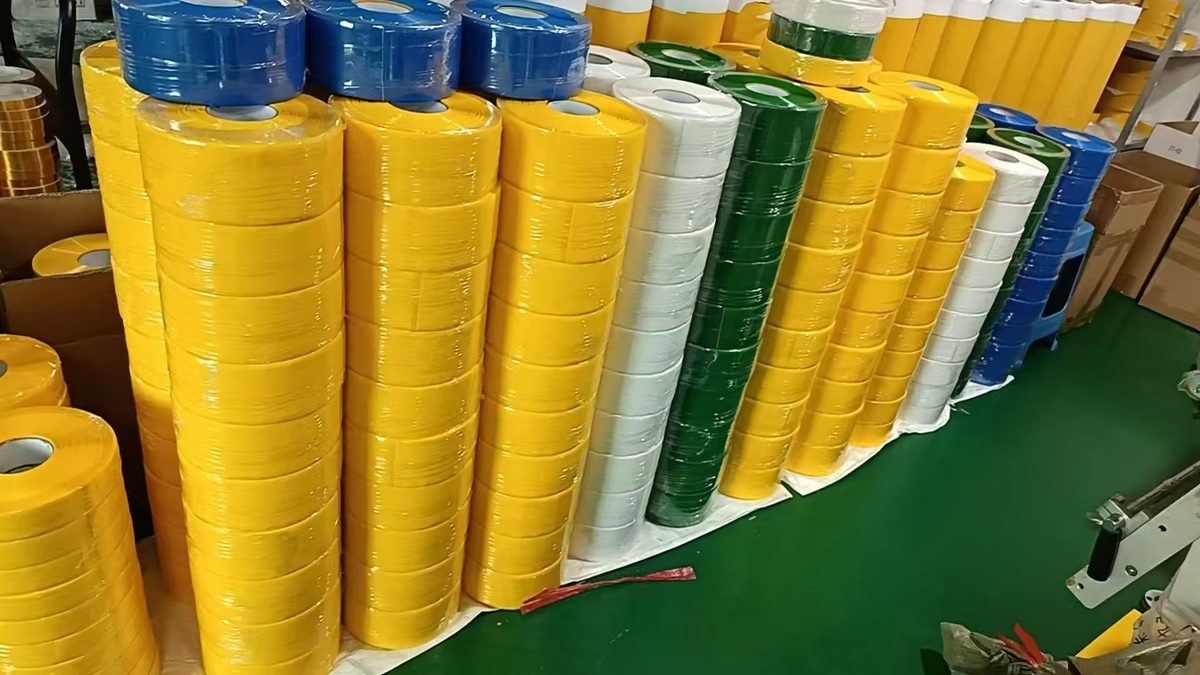
| Colors | 7 — yellow, blue, red, green, white, black, black/yellow diagonal stripe |
| Service temperature | −10 to 60 °C (14 to 140 °F) |
| Adhesive | Pressure-sensitive, coated on the backing — applied directly to the floor |
| Abrasion | Taber abraser (ASTM D4060 / ISO 9352, CS-10 wheel); sample strips tested in the live traffic path |
| Magnetic content | None — the tape is not magnetic and does not replace the guide strip |
| MOQ | Confirmed in your quotation — consult Songyang's sales team |
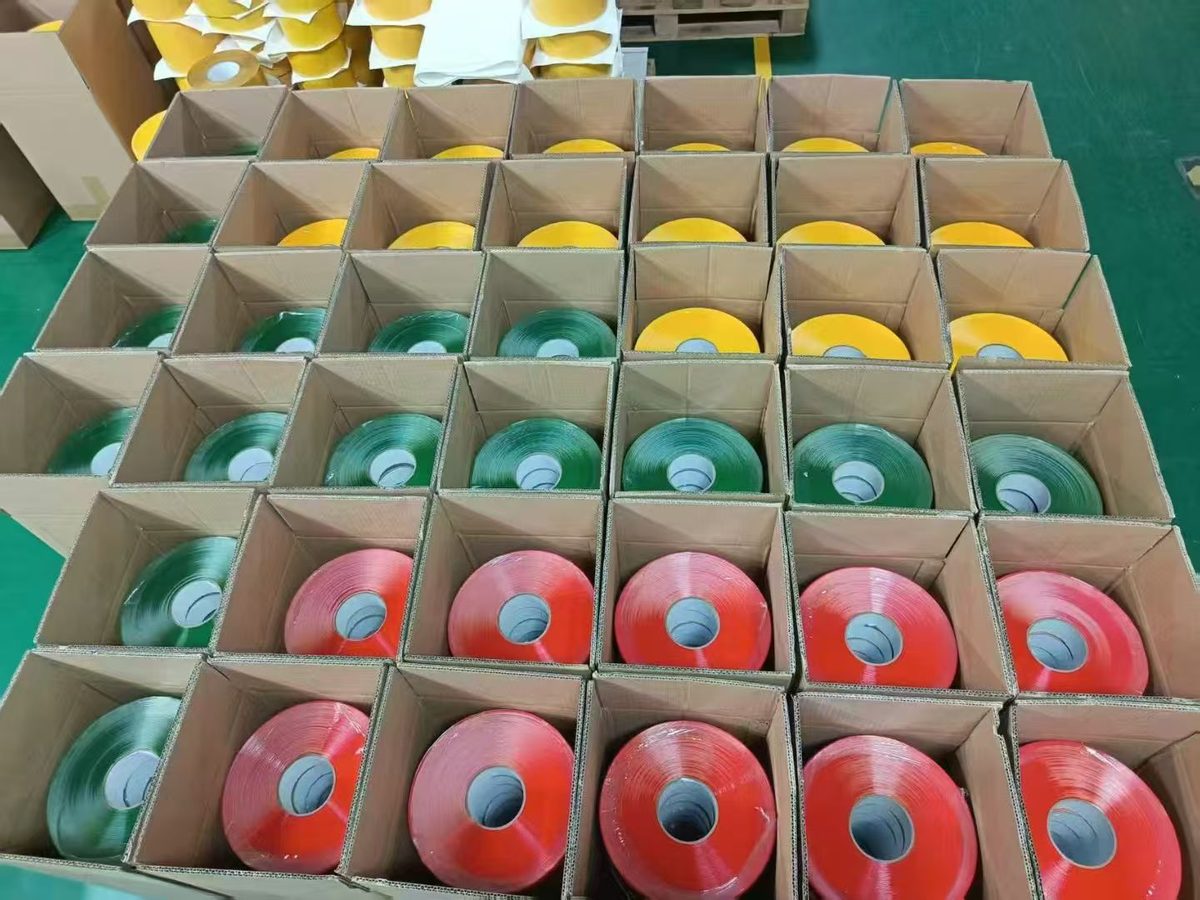
| Packaging | Standard export packing or packed to your requirement; OEM / ODM programmes supported |
How abrasion is confirmed on this grade: with a Taber abraser under ASTM D4060 / ISO 9352 (CS-10 wheel), and on site by laying a sample strip in the real traffic path and inspecting it after 24–72 hours for edge lift, surface scuffing and loss of color definition.
The sequence is what makes the product work: the guide strip goes into the floor, the tape goes over it. Reversing the order removes the point of both parts.
Groove the floor along the route, fix the magnetic guide strip into it, and bring the surface level — a proud strip becomes a wear point on its own.
Clean, dry and dust-free. Adhesive anchors to a sound floor; on damp, oily or freshly sealed concrete it will not.
Centre the tape on the guideway, peel the liner back in sections and press the tape down behind it, finishing with a hand roller along the run.
Lift an edge, peel back at a low angle, lay a new length. The strip stays in place, which is the whole reason the layer exists.
50 mm (2 in) covers a standard single guideway; 100 mm (4 in) is used where the tape has to straddle a wider groove or where two runs sit close together. Both come on fixed 30 m / 98 ft rolls with the release liner in place.
The seven colors let the covering follow the site's own route coding — yellow for main loops, another color for charging or pickup spurs, black where the route should stay visually quiet. Black/yellow diagonal stripe is used where the run doubles as a traffic boundary.
Rolls are shrink-wrapped by color on pallets or packed in export cartons, and box, label and pallet layout can be made to your requirement under OEM / ODM. Send the route length and the width and Songyang's sales team will estimate the rolls needed.
Request a Quote / Sample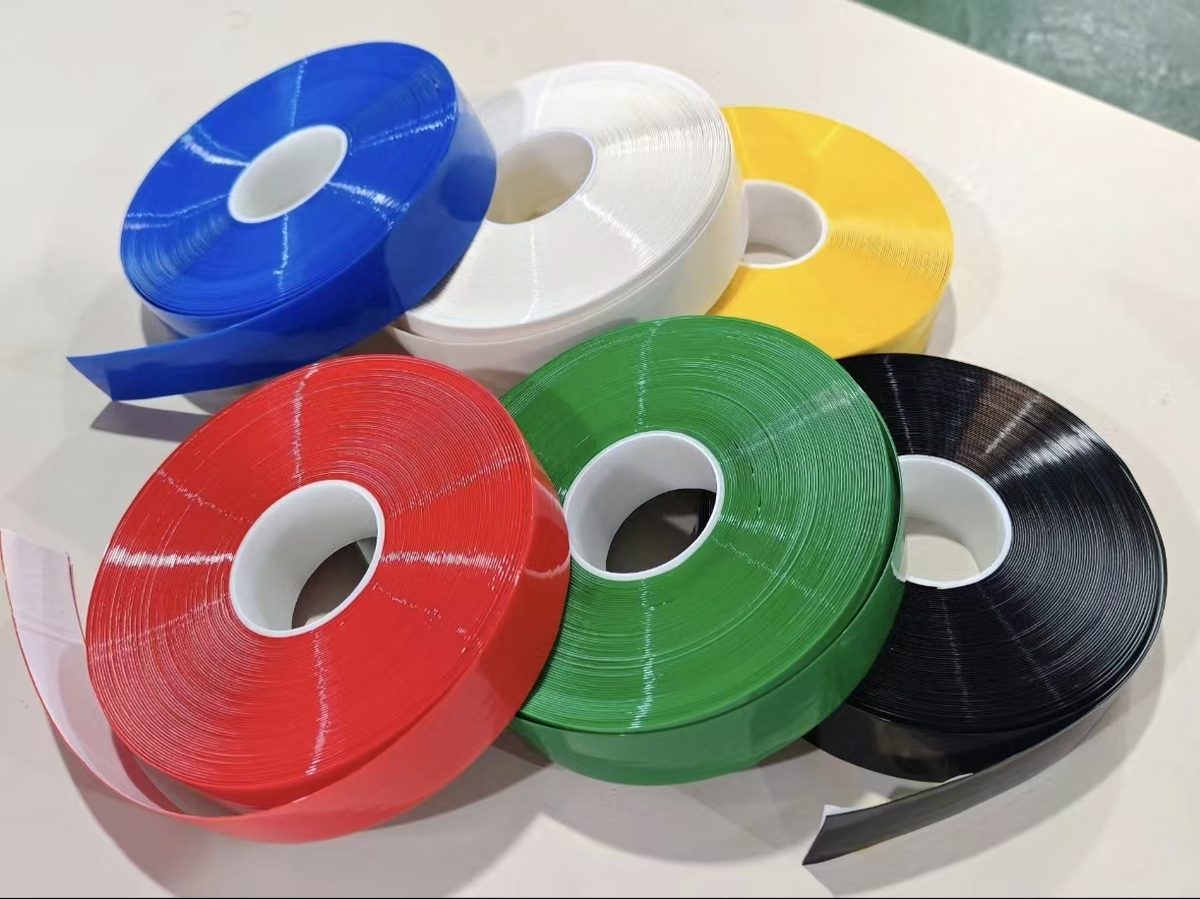
AGV and AMR routes share the floor with pallet trucks. The covering keeps the guideway readable on the busiest cross-aisles.
Where guided vehicles move between work cells and the same floor carries forklift traffic, the strip needs a consumable layer over it.
Routes get re-planned as layouts change. A tape layer is quicker to redo than a floor that has to be re-grooved.
Long, fixed guideway loops in body and assembly halls, where strip damage stops the line rather than slowing it.
Color is used to separate main loops from charging spurs and pickup points, following the site's own floor marking code.
Standard export packing, EXW and FOB terms, and documentation supplied with the goods for overseas integrators.
If the same 1.1 mm grade is going down as a lane or hazard line rather than a guideway cover, see self-adhesive floor marking tape for the PET and standard PVC grades, colors and widths.
Send the route length, width, color, quantity and destination — we reply with a quote and a technical suggestion within 24 hours. Sample strips are available for evaluation.