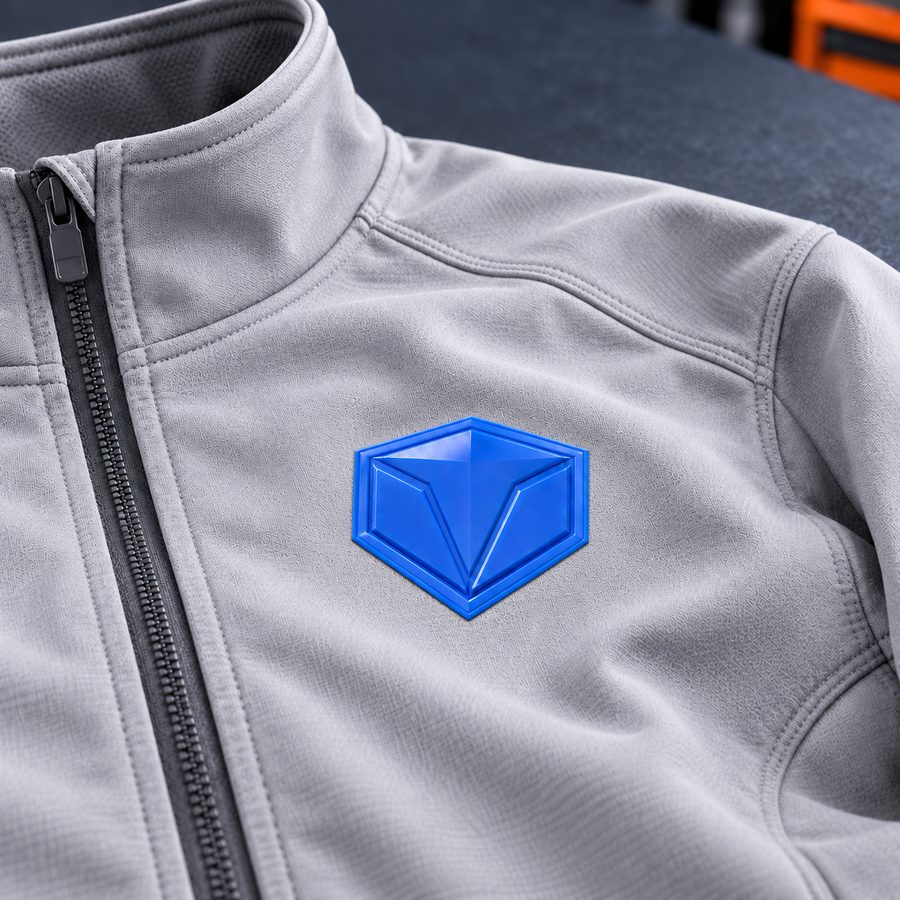
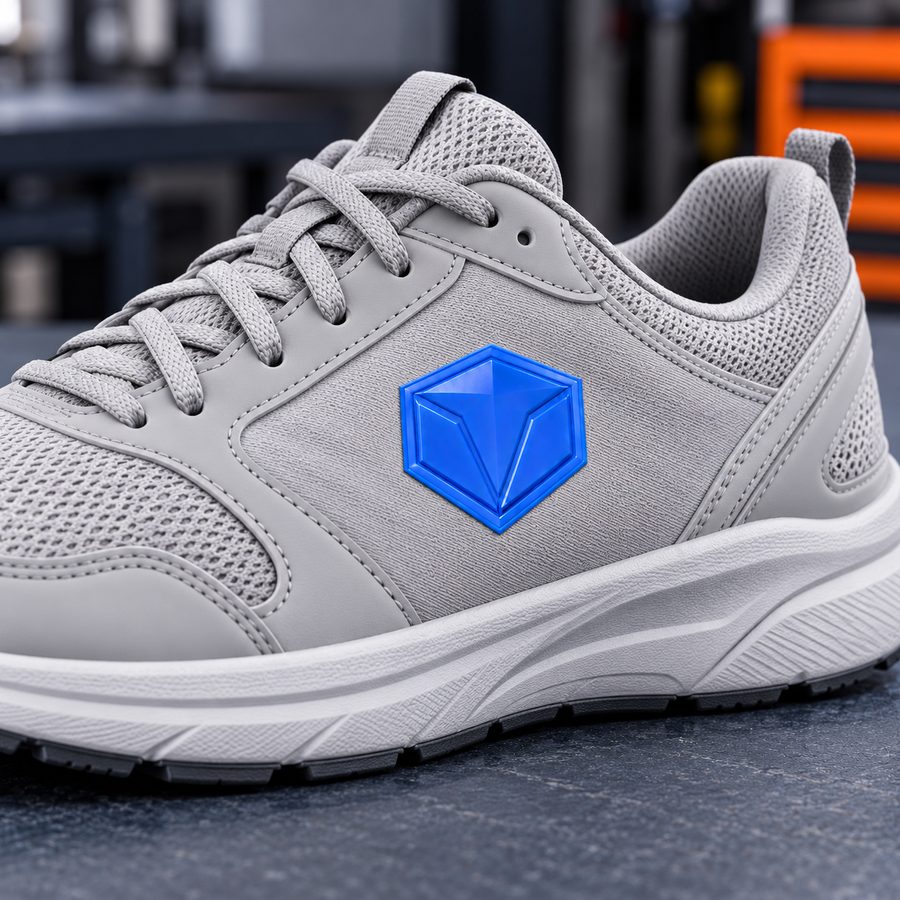
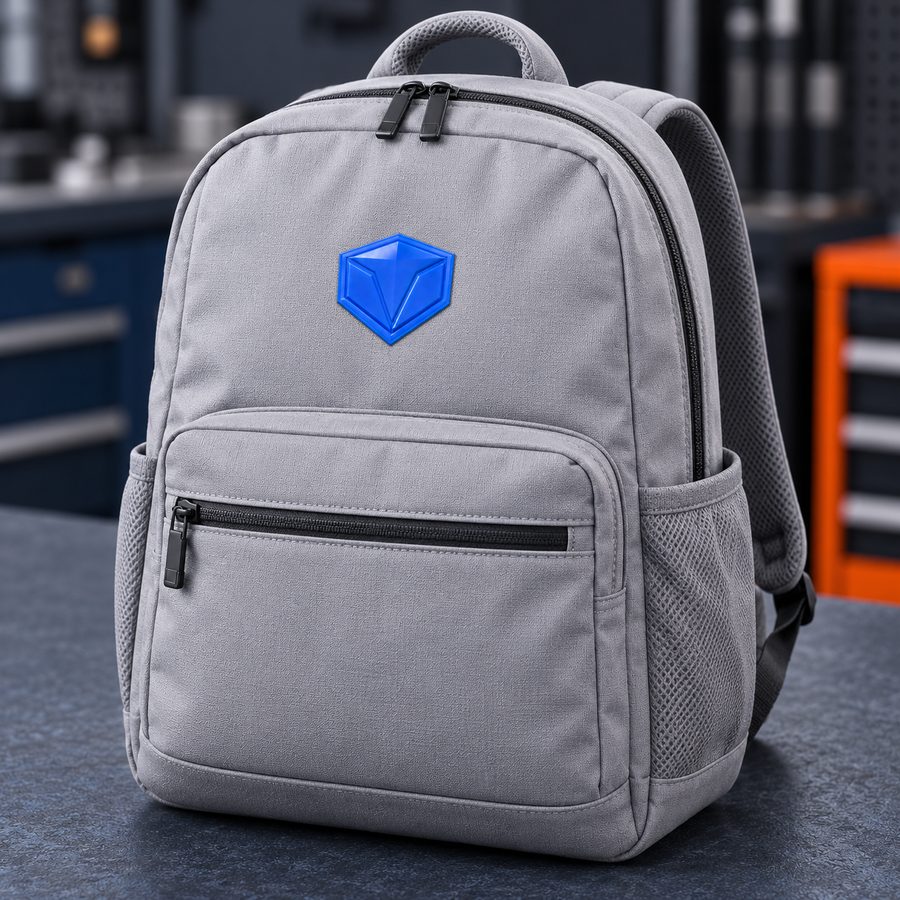
A self-adhesive, single-layer cast polypropylene (CPP) film with a lightly frosted finish, placed on TPU surfaces for protection and logo transfer in high-frequency (HF) heat-press — also called radio-frequency (RF) pressing. Standard grades 120–150 °C, selected grades up to 180 °C. Source factory in Dongguan, China.
Songyang manufactures CPP high-frequency heat-press film at its own plant in Houjie, Dongguan, Guangdong — so overseas buyers deal directly with the production line instead of through a trading layer.
Ordering from Songyang's own plant removes the trading margin between buyer and production, and puts specification questions straight to the people who run the line.
Film casting, coating, converting, slitting, printing and QC all run in-house across 16 production lines, backed by 28 years of tape and film know-how.
Raw films, adhesives, release liners and tooling are clustered around Dongguan, which shortens material lead time and supports sampling in 5–30 days.
Songyang ships to B2B buyers worldwide, supports EXW and FOB terms, and supplies commercial documentation and technical data sheets with the goods.
Songyang is a China-based manufacturer (Dongguan, Guangdong) serving global B2B buyers directly — 9,000+ m² of plant, 16 production lines, 5,000+ specifications and 5,600+ customers served. Made in China, engineered for export.
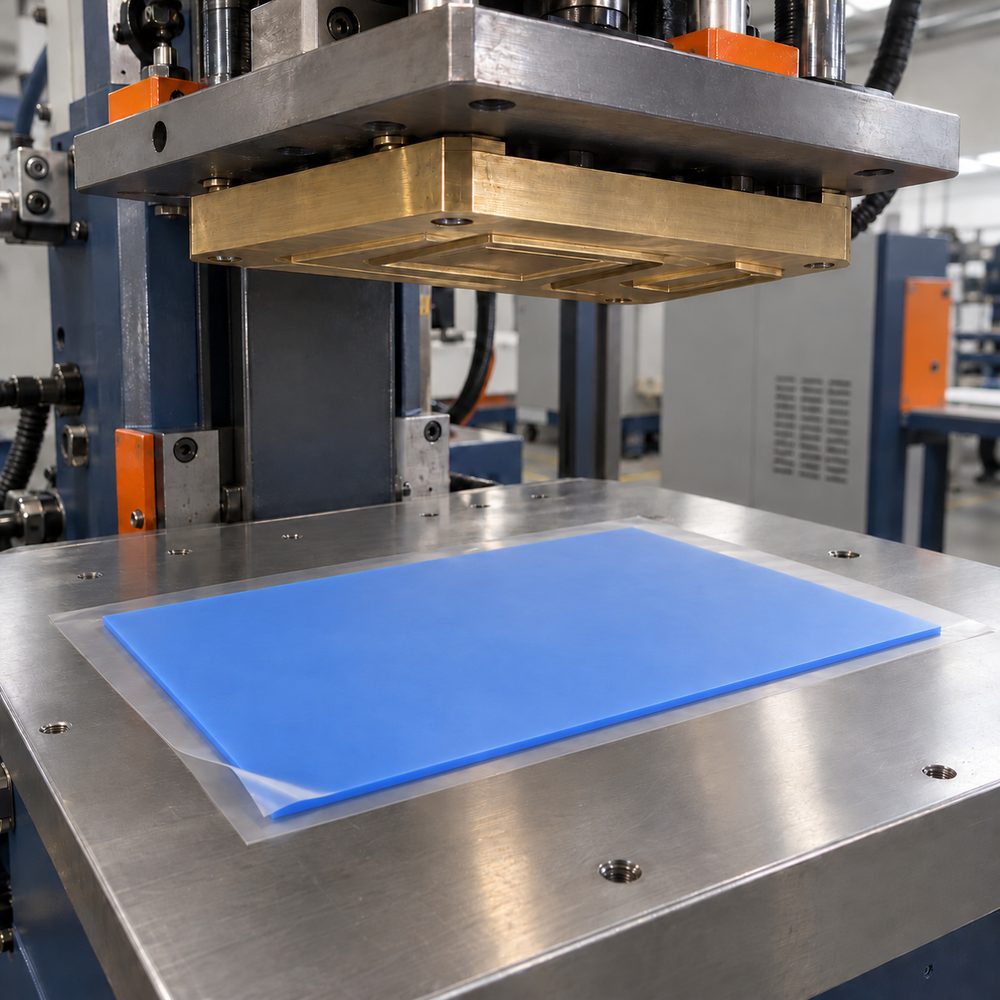
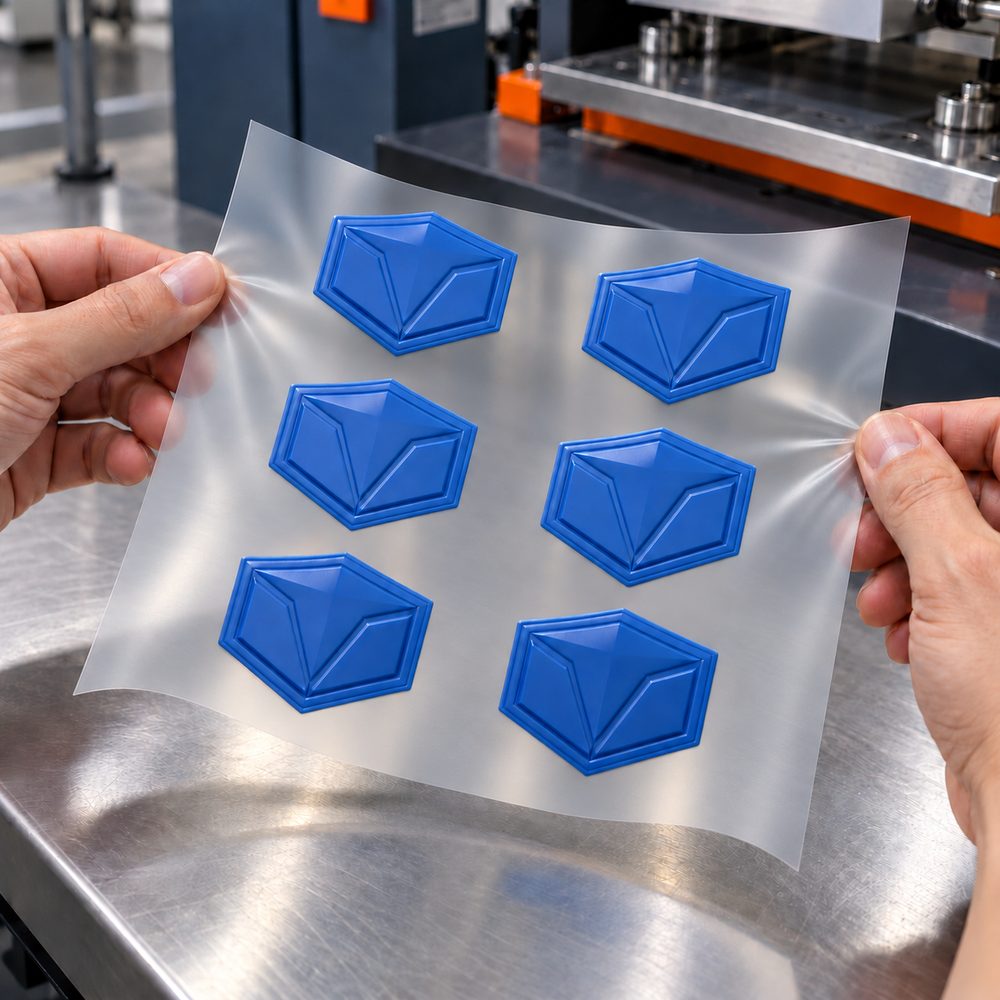
A single-layer cast polypropylene (CPP) film placed on TPU surfaces during high-frequency (HF) heat-press and hot-cut. It does double duty as both a protective layer and a transfer carrier — protecting the TPU and mold while carrying the logo shape from the HF die onto the fabric.
Songyang supplies this film as a ready-to-use consumable for apparel, footwear and bag converters that run HF TPU transfer day in, day out. Also known in the trade as high-frequency protective film, HF transfer film, TPU heat-press film or thermal-transfer carrier film — different names, same CPP single-layer film for HF TPU work.
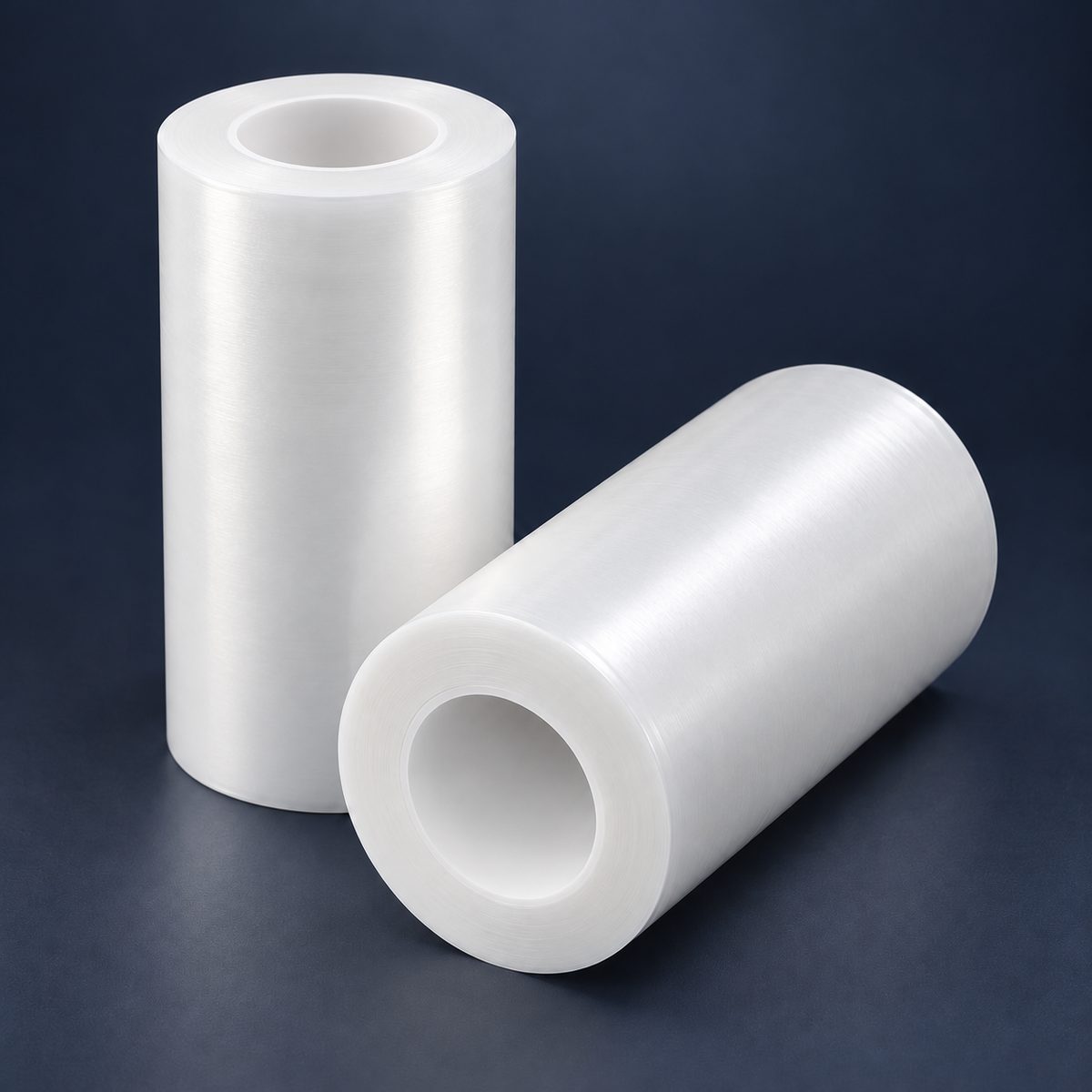
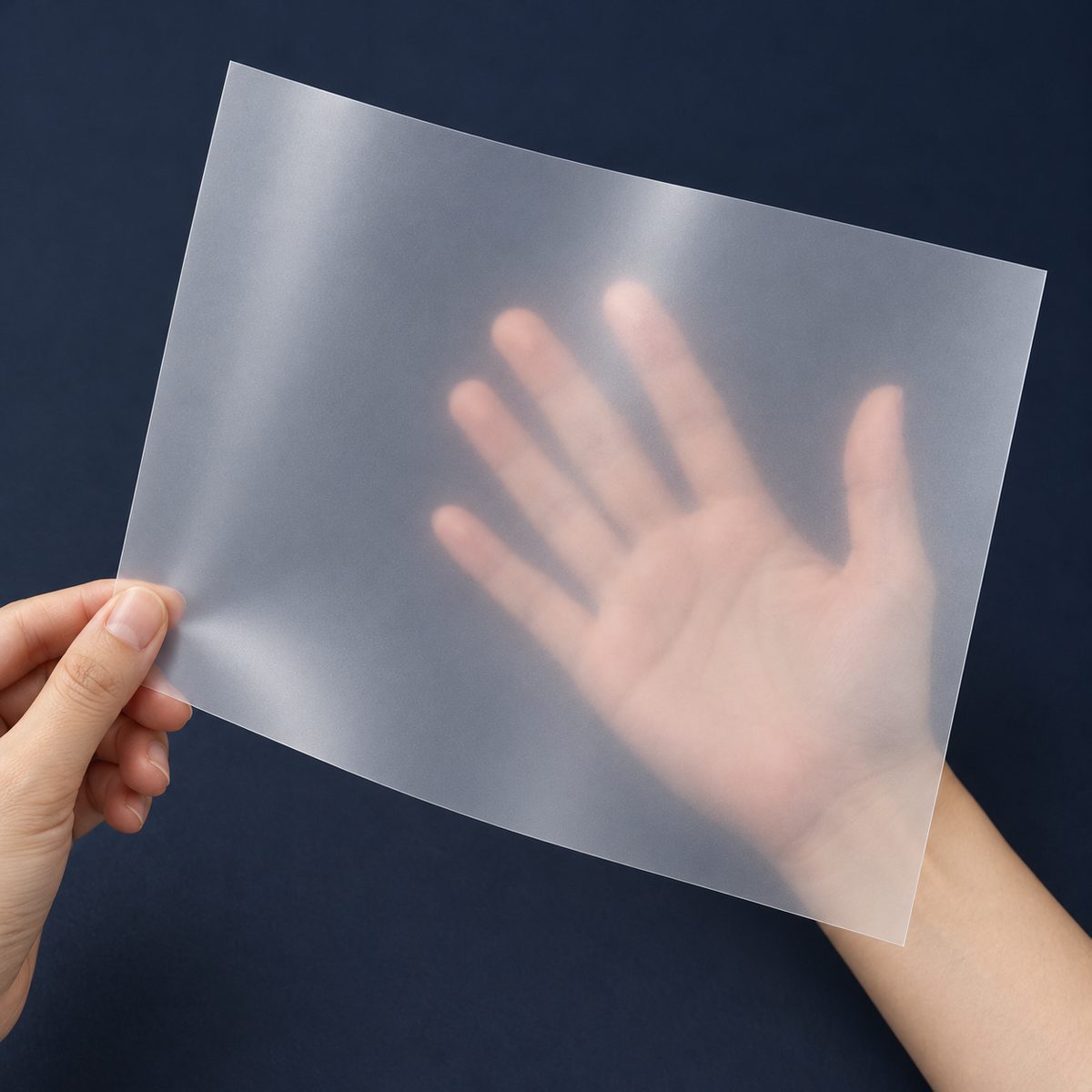
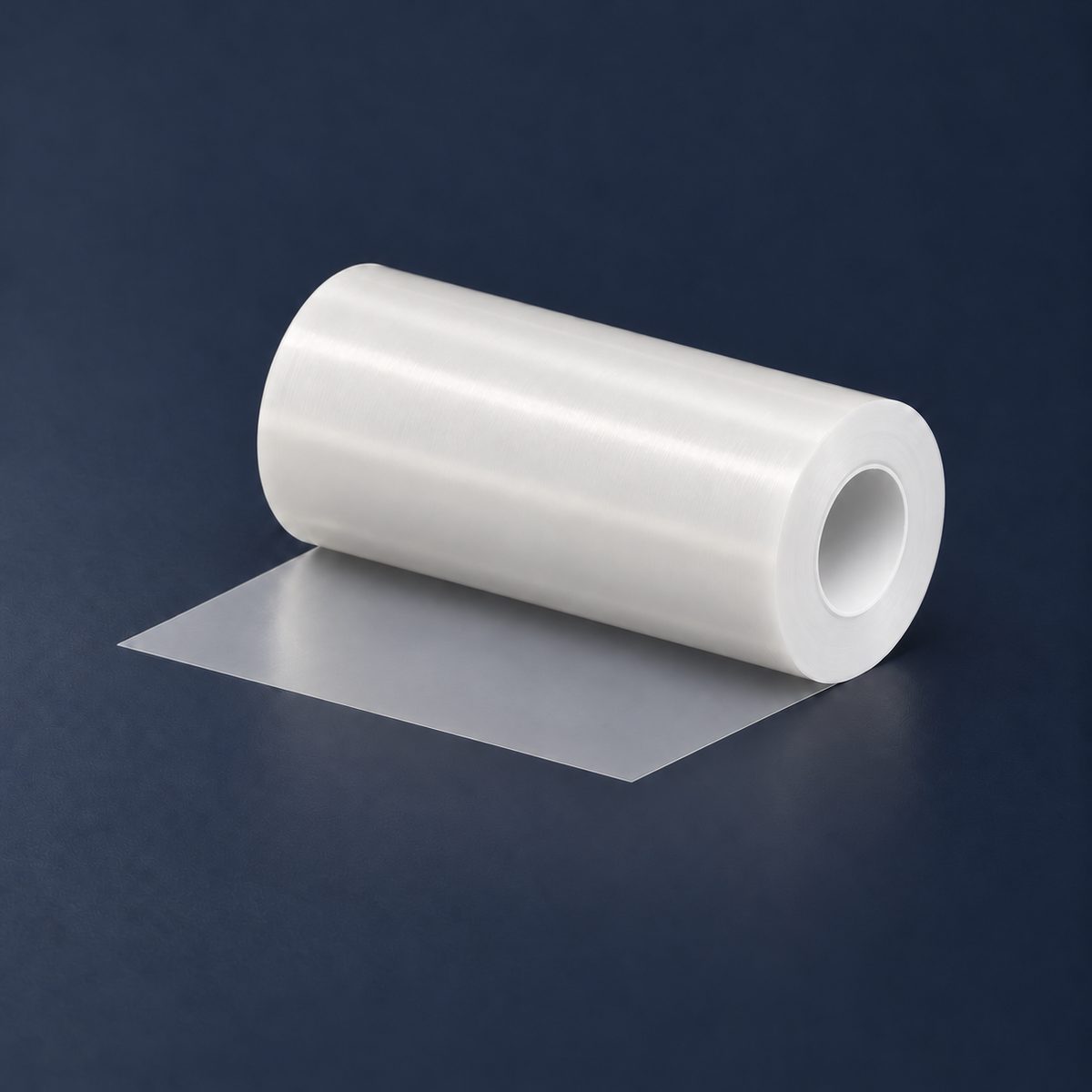
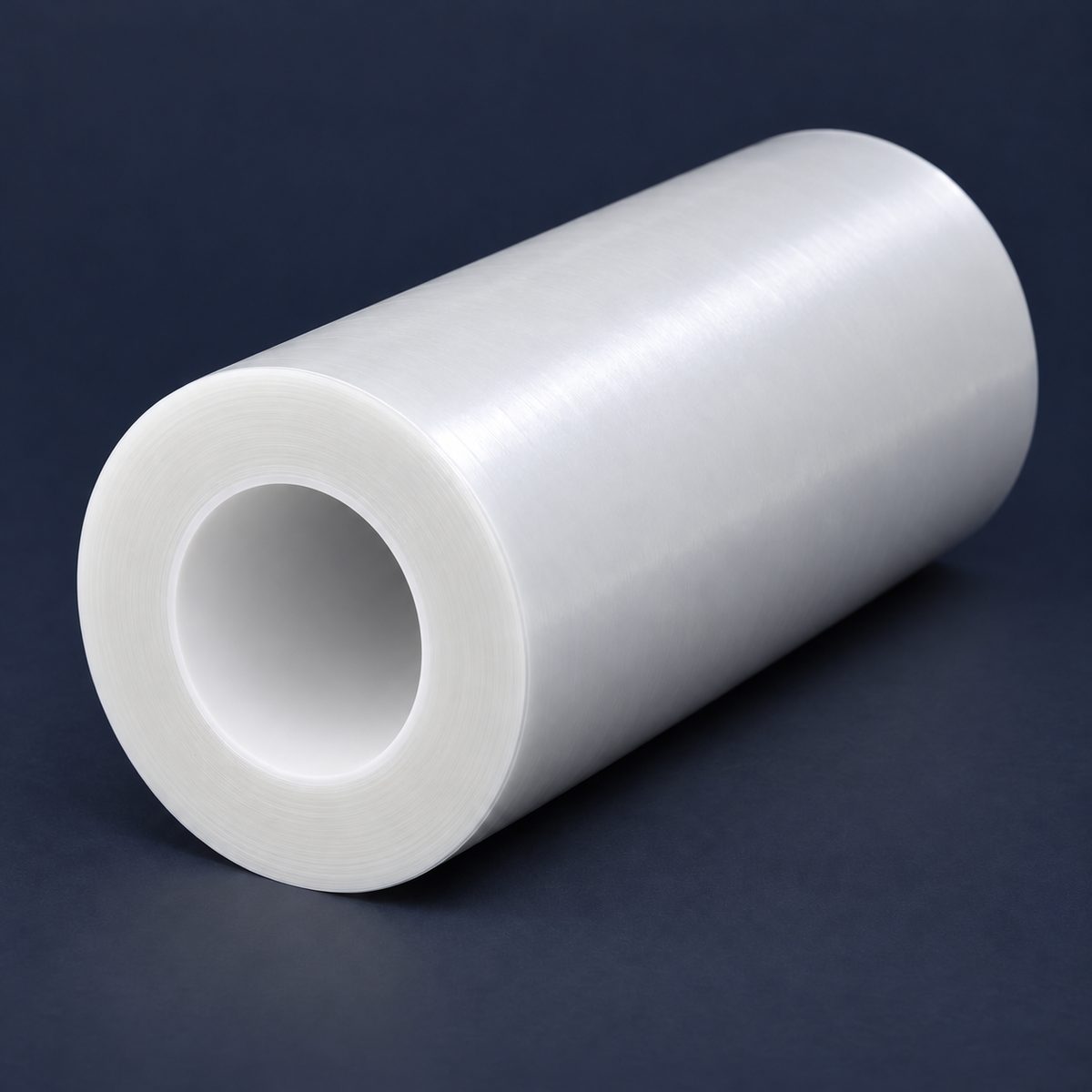
A single layer has a lightly frosted, translucent appearance. Multiple wound layers give the roll its milky-white look.
The cast self-adhesive grade is tacky at room temperature and develops stronger adhesion when heated — no separate adhesive-coating step is required. That is what keeps this a clean single-layer film rather than a coated laminate.
Songyang casts this film on its own production line, with no separate adhesive-coating step. The film is then rewound and slit to the selected grade and the confirmed order requirements.
Because casting, rewinding and slitting all happen inside one plant, gauge and tack are controlled at the source rather than checked at a trading intermediary — the same team that casts the film answers the specification questions.
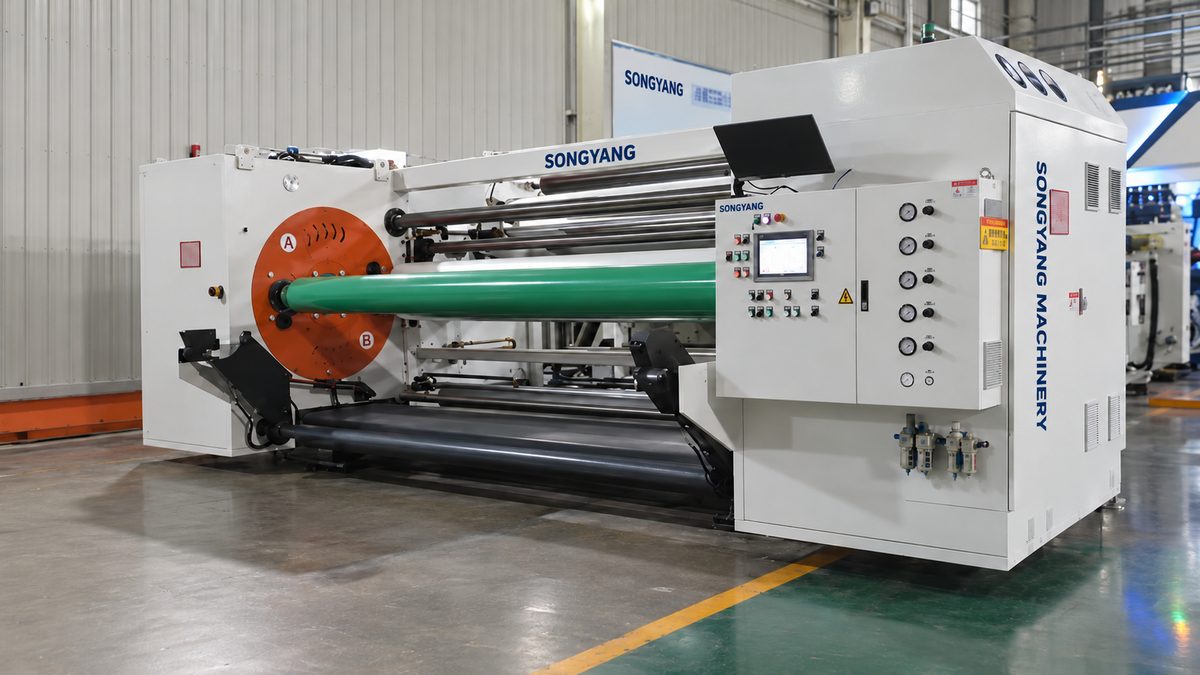
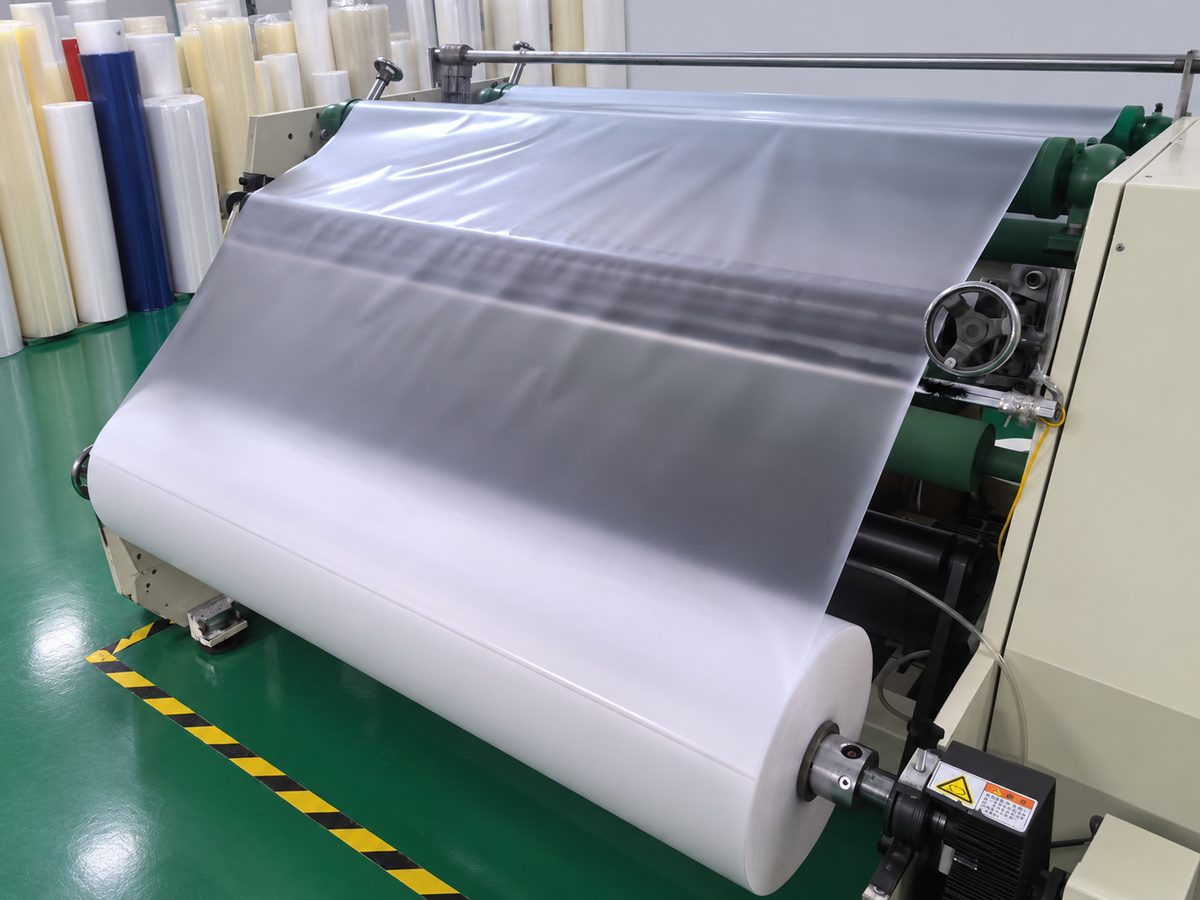
After casting, the film is rewound into rolls.
Send Songyang your machine's usable film width, required roll length and roll-change requirements, and suitable roll sizes and slitting options can be discussed for your line.
Available widths, roll lengths and slitting options depend on the selected grade — refer to the applicable Songyang specification sheet.
One CPP single-layer film, offered across the thickness, finish and tack that HF TPU transfer actually calls for.
| Variable | Options | Note |
|---|---|---|
| Thickness | 0.06 / 0.08 / 0.10 / 0.12 mm (60 / 80 / 100 / 120 μm) | 0.08 and 0.10 mm are most common |
| Surface finish | Frosted · Transparent | Frosted is the standard grade; transparent for maximum clarity |
| Adhesive | Self-adhesive cast grade — tacky at room temperature, stronger when heated | No separate coating step |
| Tack grade | Low / Medium / High | Matched to your process |
| Standard width | 1,380 / 1,040 mm | Slit to your machine width |
Explore the wound film and the roll-end detail of the frosted grade — white plastic core, even gauge across the roll.
Lighting, display settings and image processing may affect how color, transparency and haze appear in photographs. Please use the mutually approved sample and agreed specifications as the reference when assessing the delivered product.
Color note: product color may differ slightly from the photographs — the physical sample is the reference.
HF heat-press TPU runs at 120–180 °C. Pressing TPU straight onto the die risks sticking, scorching and ragged edges. A CPP layer separates the two — protecting the TPU surface, the tooling and the yield.
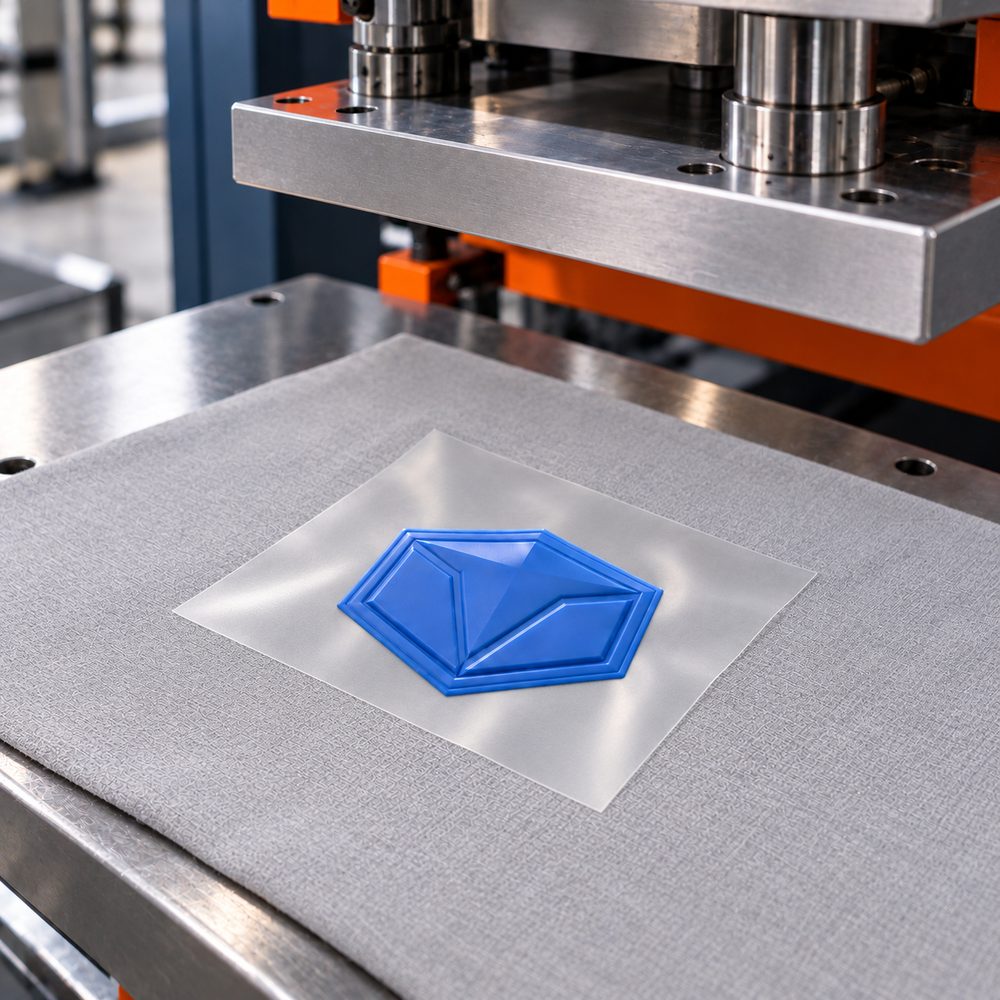
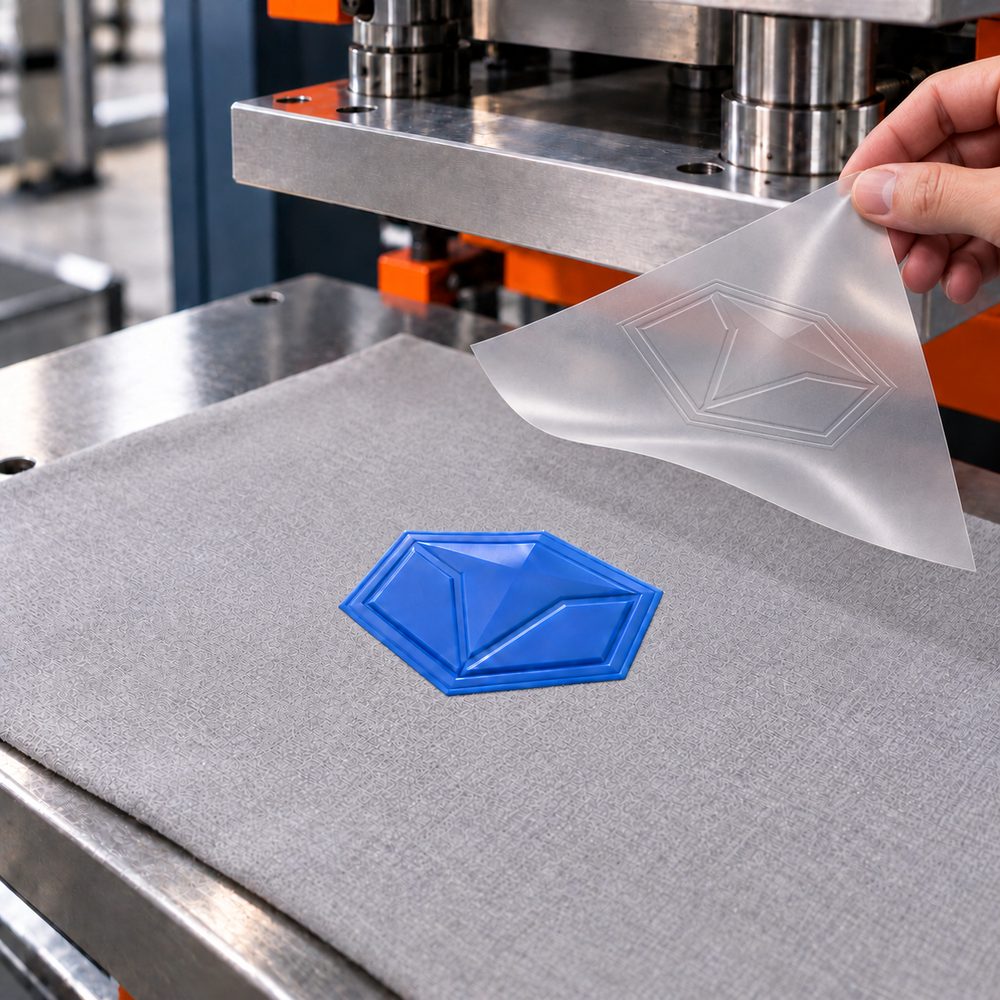
When the die presses the shape, the pattern transfers first onto the CPP film; that film then carries the logo to the fabric in a second press. Without this film, the transfer step breaks.
Running without the film means sticking and rework. The right single-layer CPP stabilizes the process and lowers scrap, so the line keeps moving with fewer stoppages.
Values below are typical ranges. Final specification is confirmed against your HF machine and product. (Minor batch variation and color difference may apply — confirm with our sales team.)
| Item | Typical Range / Note |
|---|---|
| Base material | CPP (Cast Polypropylene), single-layer |
| Function | Protective layer + transfer carrier (2-in-1) |
| Process | High-frequency (HF) heat-press / hot-cut on TPU |
| Temperature range | 120–150 °C standard; up to 180 °C (selected special grades) |
| Thickness | 0.06 / 0.08 / 0.10 / 0.12 mm (60 / 80 / 100 / 120 μm); 0.08 & 0.10 mm most common |
| Standard width | 1,380 / 1,040 mm |
| Roll length options | 1,380 mm × 100 m · 1,380 mm × 200 m · 1,040 mm × 100 m · 1,040 mm × 200 m |
| Color / finish | Frosted · Transparent |
| Adhesive | Self-adhesive cast grade — tacky at room temperature, stronger when heated; no separate coating step |
| Release & clean removal | Clean removal — peels off without transferring adhesive |
| Structure | Single-layer film — uniform gauge, stable for heat-press |
| Process type | Frosted self-adhesive film · clear coated film |
| Slitting | Slit to your machine width |
| Tack grade | Low / medium / high available |
| QC standard | No obvious bubbles or foreign matter when opened |
| Packaging | Carton, shipped as full rolls |
| MOQ | Full-roll purchase; slitting to width supported |
| Sampling lead time | Usually same-day shipment |
| Production lead time | Stock 1–3 days; custom ~7 days |
| Shipping lead time | 1–7 days |
| Stock / invoicing | Stock supported; invoice and after-sales provided |
| Customization | Size / packaging / drawing / sample / OEM·ODM; color limited to frosted & transparent, no logo/print needed |
| Eco compliance | Compliance documents available with the order |
Thickness is given in millimeters, with micrometers in brackets. Tack is stated as a grade (low / medium / high) rather than a single peel-force number — tell our sales team your machine and process and the right grade is matched.
Match the grade to the job — thickness by logo detail, finish by look, tack by machine.
| If you need… | Choose |
|---|---|
| Fine, detailed logo edges | Thinner 0.06 / 0.08 mm |
| General HF TPU transfer | 0.08 / 0.10 mm — most common |
| Heavier TPU or higher pressure | Thicker 0.12 mm |
| A soft, non-glare look | Frosted finish |
| Maximum clarity / gloss | Transparent finish |
| Stronger hold on the die | Medium / High tack grade |
Our film combines the protective layer and transfer carrier in a single step — simpler than the conventional "positioning film + hot-melt adhesive film" approach.
Processing temperature, pressure, pressing time and peel conditions must be confirmed through sample testing with the selected film grade, TPU material, fabric and equipment.
Film compatibility should be confirmed through sample testing for each TPU formulation and substrate.
Tell Songyang about your application so a suitable grade can be discussed and samples arranged for testing.
Please share: your TPU material and final substrate · processing temperature, pressure and pressing time · logo and mold details · usable film width and required roll length · your current film sample or process photos, if available.
Request a Sample