A paper platen tape for garment screen printing — plain paper with a rubber pressure-sensitive adhesive on the platen side and a release-treated back. It goes down as a replaceable facing that keeps spray adhesive, ink and lint off the board.
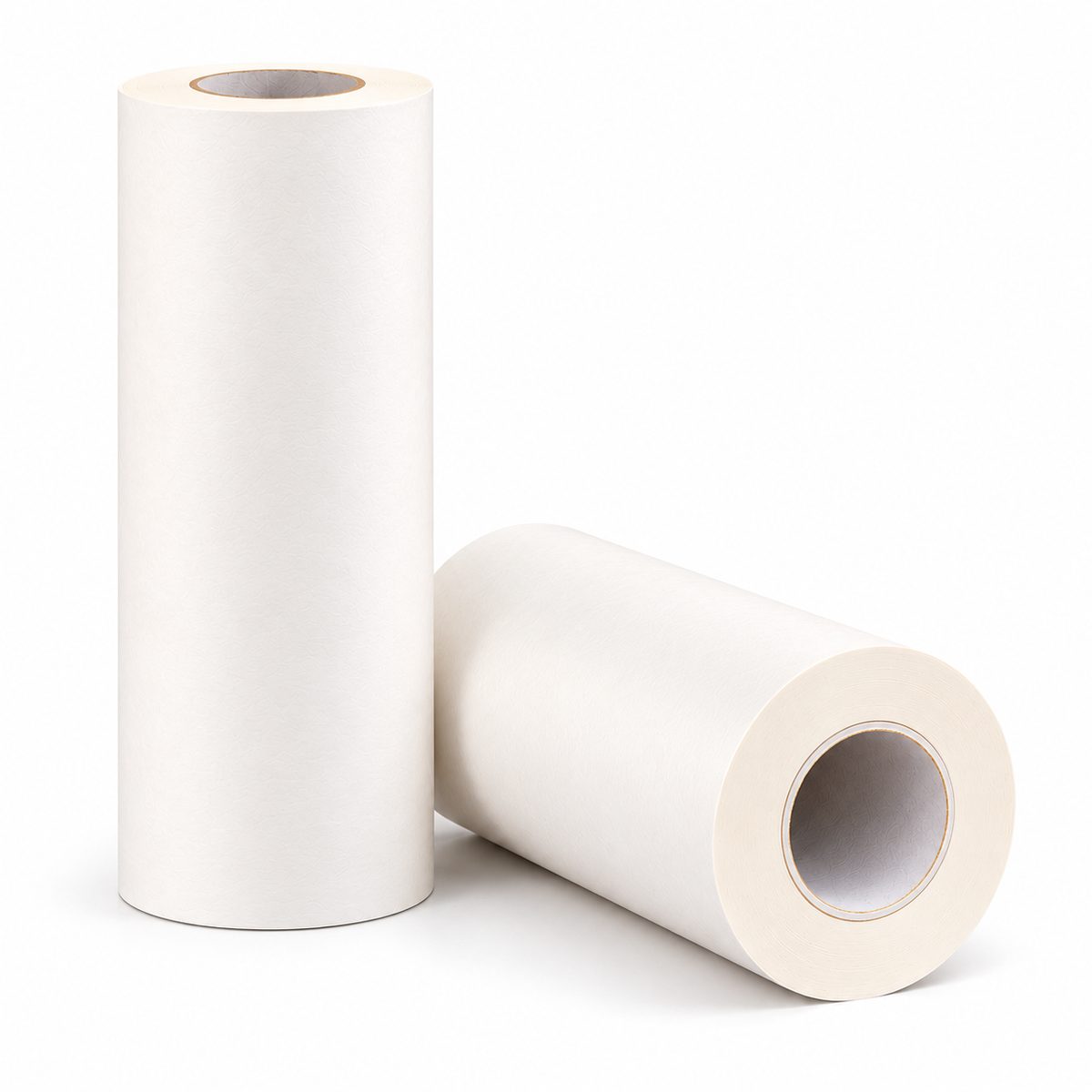
Songyang platen tape — sold in the trade as pallet tape, platen paper or pallet paper — is a single-side paper tape built for textile screen printing presses. The rubber adhesive holds the facing to aluminum, steel or wooden platens; the paper surface is where the shop applies its own platen adhesive for garment hold. When the facing is loaded with spray adhesive and ink, it lifts off in one piece and a new length goes down, so the platen itself stays clean. Coating, slitting and inspection run in-house at Songyang's Dongguan, China plant — 28 years in the tape and film business, 16 production lines — which is why overseas print shops buy this consumable factory-direct instead of through a trading layer.
A uniform plain-paper surface at 130 μm ± 10 μm total thickness. Flat enough to hold registration marks and to keep print pressure even across the platen.
The back of the paper is release-treated, so the roll unwinds without blocking and there is no liner to strip, store or throw away at the press.
A rubber-based pressure-sensitive adhesive holds the facing through squeegee passes, garment loading and press vibration, and still lifts off when the job changes.
500 / 610 / 650 mm (19.7 / 24 / 25.6 in) at 100 m (109 yd) per roll — about 9 percent more length than a 100 yd pallet tape, so a roll lasts longer between changes.
Songyang makes platen tape at its own plant in Houjie, Dongguan, Guangdong — a paper coating and slitting line the buyer deals with directly, not a trading desk that buys in finished rolls.
Ordering from Songyang's own plant removes the trading margin between buyer and production, and puts paper grade, adhesive and width questions straight to the people running the line.
Back-side release treatment, adhesive coating, curing, slitting and QC all run at the Dongguan plant across 16 production lines, so width and roll length are set to order rather than picked from a catalog.
Base paper, adhesives and release agents are clustered around Dongguan, which shortens material lead time and supports sampling in 5–30 days.
Songyang ships to B2B buyers worldwide, supports EXW and FOB terms, and supplies commercial documentation and technical data sheets with the goods.
Songyang is a China-based manufacturer (Dongguan, Guangdong) serving global B2B buyers directly — 9,000+ m² of plant, 16 production lines, 5,000+ specifications and 5,600+ customers served. Made in China, engineered for export.
Structural data for the standard paper grade. Values are typical figures — the final specification is confirmed against your press and application before an order is placed.
| Parameter | Value |
|---|---|
| Facing | Plain (flat) paper, white, release-treated back |
| Adhesive | Rubber-based pressure-sensitive adhesive, single side |
| Construction | Paper + adhesive, two layers, no release liner |
| Total thickness | 130 μm ± 10 μm (0.13 ± 0.01 mm) |
| Color | White |
| Standard roll widths | 500 / 610 / 650 mm (19.7 / 24 / 25.6 in) |
| Standard roll length | 100 m (109 yd) per roll |
| Master roll | 1,250 mm wide, slit to the width ordered |
| Service temperature | 80 °C (176 °F), tested for 30 min |
| Conversion | Slit to width; other widths and roll lengths quoted on consultation |
Roll width is chosen against the board, not the print area: the facing should be wide enough to wrap the platen edges, so a 24 in (610 mm) platen takes the 650 mm roll. Confirm the width with Songyang's sales team when quoting.
Platen tape is a consumable, and it only does its job when the layers are understood in order. The sequence below is what the shop sees on the board, from the platen up to the garment.
Songyang platen tape is applied adhesive-side down, straight onto the platen, and the paper face becomes the new working surface. Because the paper carries no adhesive of its own, the garment is held by the platen adhesive the shop applies on top — the same water-based or spray adhesive used before the facing was fitted.
Please note: platen tape is not a double-sided tape. The paper face will not hold a garment on its own, and the product is not a substitute for platen adhesive.
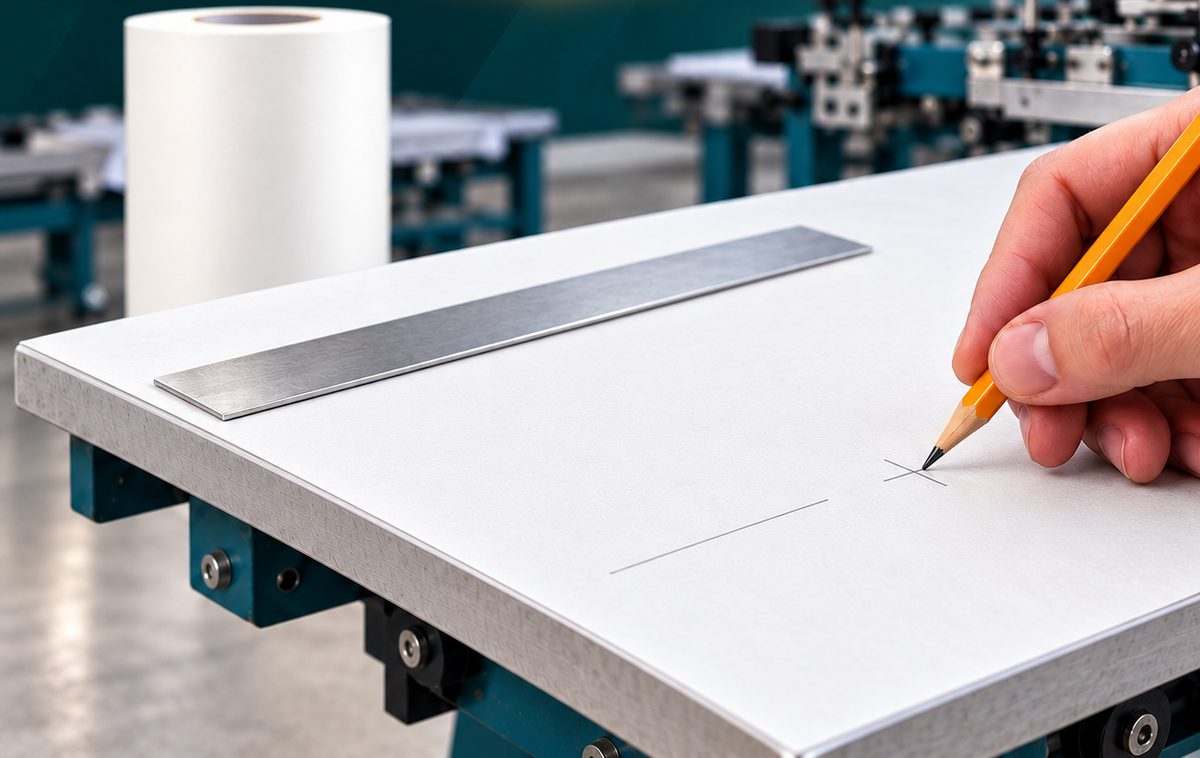
Printers set centre lines, platen edges and repeat positions directly on the facing with a pencil or marker. Because the surface is flat paper rather than film, the marks stay visible without smearing under the squeegee, and a new mark can be made the moment a job changes. On multi-colour work the facing also protects the registration the shop has already dialled in — the board underneath never has to be re-cleaned between colours.
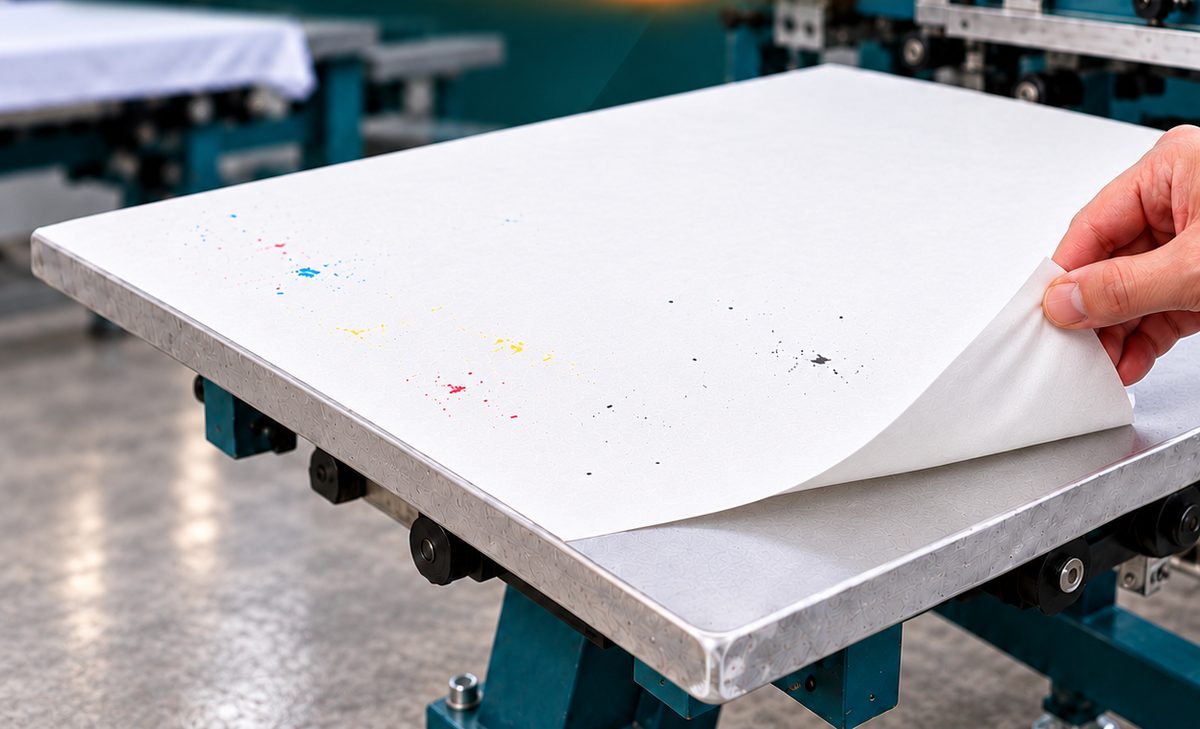
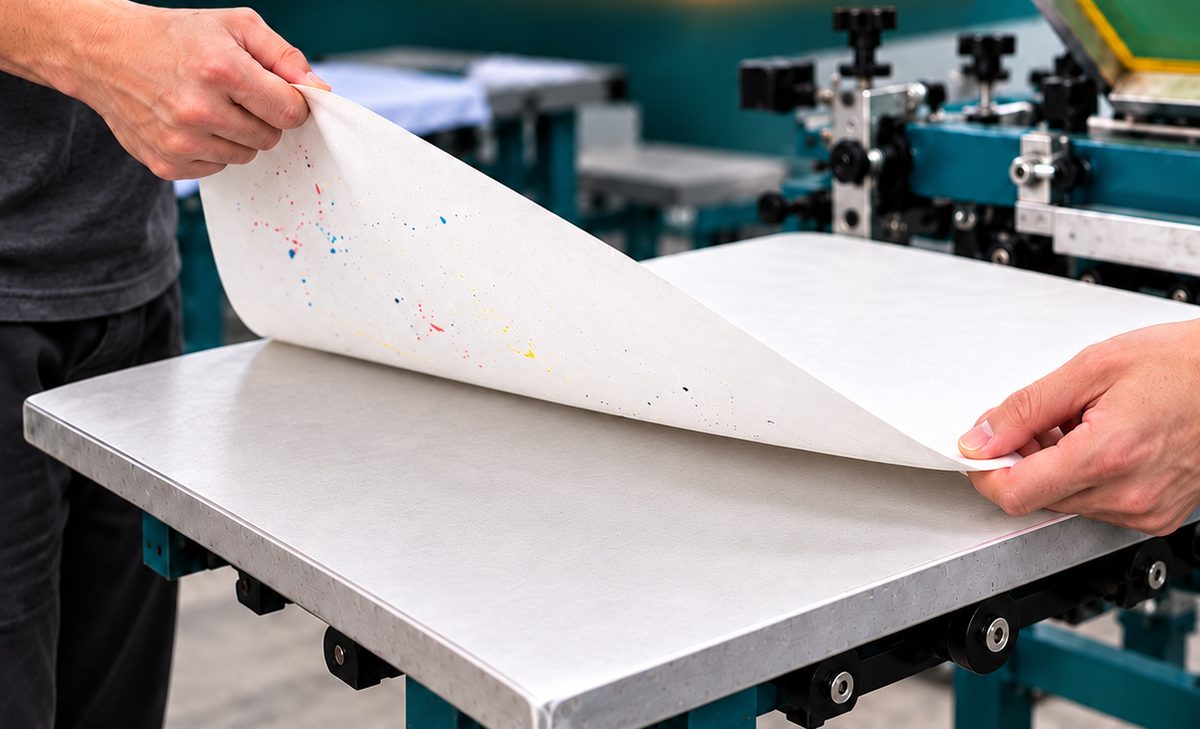
A facing that is heavy with spray adhesive and ink gets replaced rather than scrubbed. The operator lifts one corner, pulls the paper back at a low angle so it comes away in a single sheet, wipes the board if adhesive has crept past the edges, and lays a new length. That is the whole maintenance cycle — no solvent wash of the platen, and no scraping of cured adhesive off aluminum.
| Consideration | Paper platen tape | Polyester pallet tape |
|---|---|---|
| Surface | Flat matte paper; takes pencil registration marks | Smooth film; wipes clean rather than marking |
| Removal | Comes away in one sheet at a low pull angle | Stretches before it tears; needs a firm pull |
| Heat | 80 °C (176 °F) tested for 30 min | Tolerates higher surface heat than paper |
| Cost per platen | Lower; replaced more often | Higher; held longer between changes |
| Typical fit | Manual and automatic shops that change the facing often, and multi-colour work that needs marking | High-volume automatic presses running heavy flash-cure duty |
Songyang quotes the paper grade described on this page. Tell the sales team your press type, platen width and cure cycle if you are unsure which construction fits.
Send platen width, roll length and volume — we reply with a quote and technical suggestion within 24 hours.
Get a Quote